Four volumes of peer-reviewed theological scholarship.
Join the next generation of theological scholars.
Meet the minds behind the Warren Foundation.
Publish your research in our peer-reviewed journal.
Help keep rigorous theology free and accessible.
Our Library
Browse all published articles from the Warren Journal of Theology
Browse by Issue
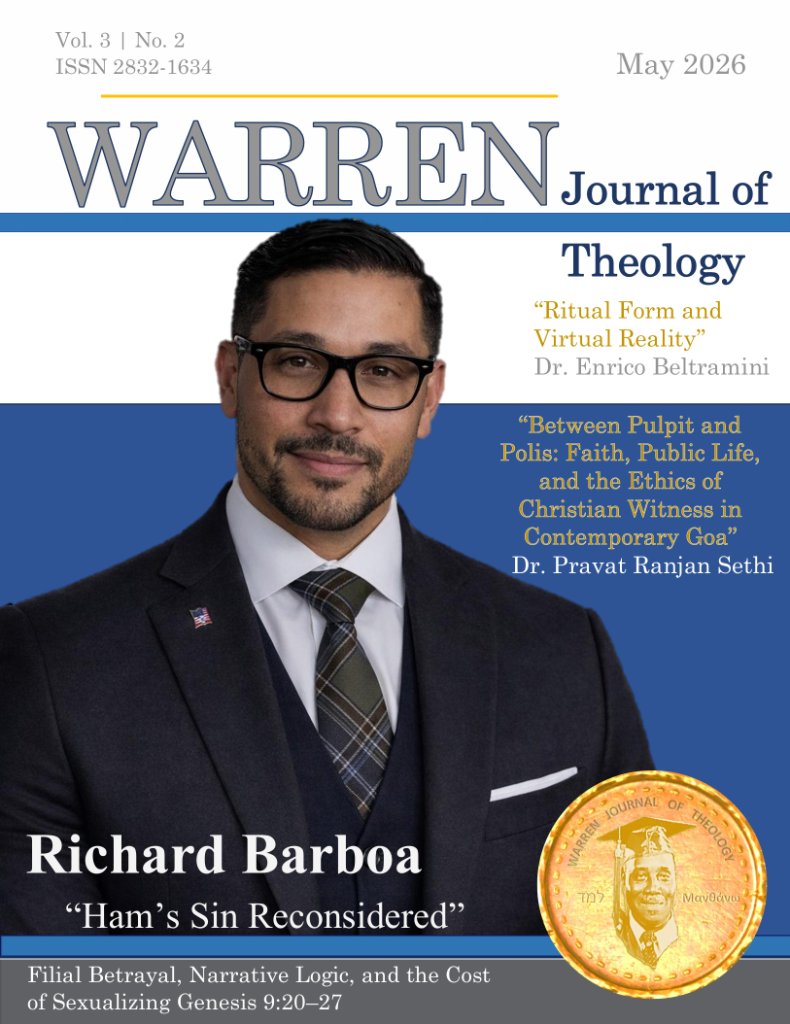
The central claim of this study is that virtual reality (VR) is not a suitable medium for ensuring the validity of liturgical rites. While this conclusion is not in itself novel, the reasoning offered in support of it is. The article examines two dominant ways of conceptualizing VR: as a space and as an interface. When understood as a space, VR fails to meet the requirements of sacramental ontology and cannot enable the ontological transformation through which divine presence constitutes space as sacred. When reconceived as an interface, the ontological objection can be set aside, but a more fundamental difficulty remains: the impossibility of sustaining ritual form. Ritual form presupposes a unified, embodied, and ecclesial enactment of a received rite, whereas VR structures participation as mediated and parallel experiences rather than as a single liturgical action. Thus, the article concludes that, whether conceived as space or interface, VR cannot provide the conditions required for the valid enactment of liturgical rites.
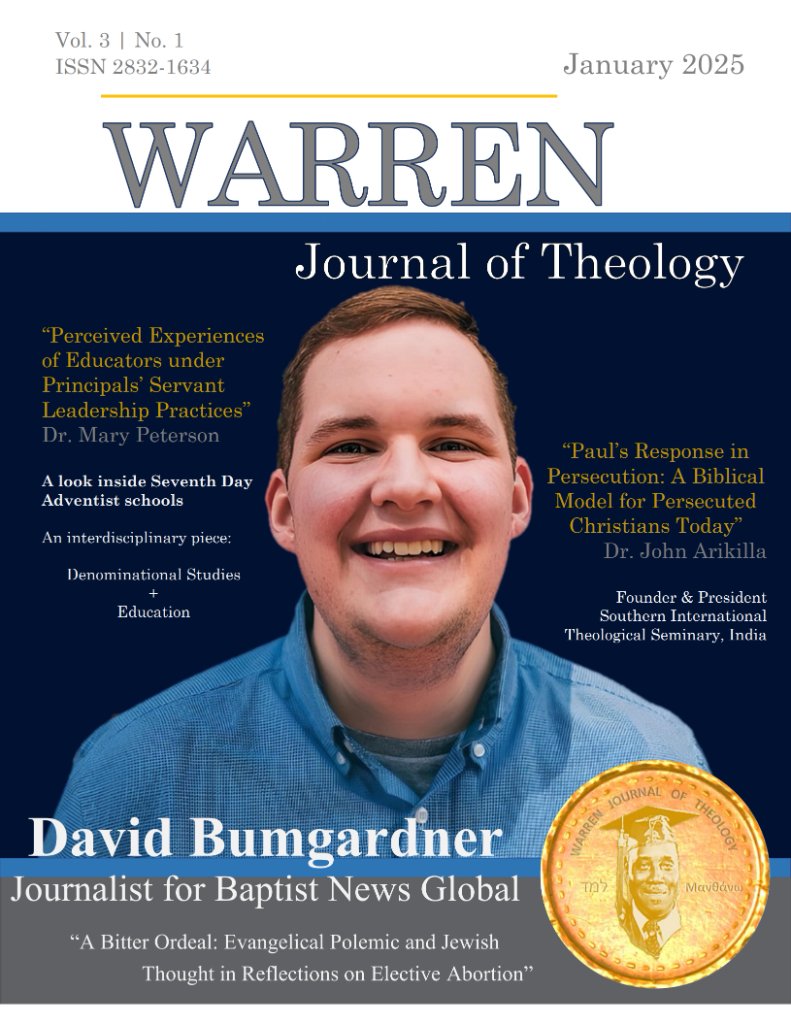
Since persecution is unavoidable and many Christians are already undergoing it, how should persecuted Christians respond? This paper focuses on how the apostle Paul responded in persecution. Paul utilized available human rights for the propagation of the gospel, followed biblical instructions, and endured persecution for the glory of God. The implications drawn from Paul's life provide a model for today's persecuted Christians.
This essay examines the often-overlooked Jewish perspectives on abortion and unborn life, arguing that the evangelical approach to the issue is incomplete without engaging the rich Jewish interpretive tradition from which Christianity inherited its Scriptures. The piece explores Numbers 5:11-31, rabbinical texts from the Mishnah and Talmud, and contemporary Jewish feminist contributions to the abortion debate.
The Purpose of this qualitative phenomenological case study was to explore what servant leadership qualities teachers perceive in their school principals that can lead to a supportive, satisfying, and productive work environment. Participants consisted of nine Seventh-day Adventist classroom teachers from varied grade levels and subject areas in three Texas SDA schools. The findings suggested that teachers had definite preferences in their principals' servant leader qualities when it came to communicating, establishing the mission for their campus, and how appreciation is demonstrated towards all teachers.
This paper examines the relationship between faith and public life in contemporary Goa, situating Christian theological reflection within a historically layered, postcolonial, and plural socio-political context. Goa offers a unique site where ecclesial traditions, colonial inheritances, and modern democratic practices intersect, shaping distinctive forms of Christian public engagement. Drawing on scriptural hermeneutics, ecumenical theology, and lived practices of the church, the study interrogates how faith communities negotiate questions of justice, secularism, identity, and civic responsibility. It further explores the tension between orthodoxy and contextual responsiveness, suggesting that faithful Christian witness must move beyond doctrinal preservation toward transformative participation in public life. By bridging academic theology and ecclesial praxis, the paper contributes to broader global conversations on faith in the public sphere, proposing Goa as a microcosm for reimagining ethical Christian engagement in diverse societies.
This article reexamines Genesis 9:20–27 and argues against interpreting Ham's offense as a sexual violation. Through close analysis of the text's grammar and narrative structure, it shows that the passage emphasizes a moral contrast between exposure and covering, not sexual transgression. Ham's sin is best understood as filial betrayal—publicizing his father's shame—while Shem and Japheth model honor by protecting it. Situating this reading within the broader canon, the study highlights filial honor as a central covenantal norm. It critiques sexualized interpretations for imposing later legal categories, particularly from Leviticus, onto the narrative without textual warrant. Finally, it demonstrates how such readings have historically contributed to racialized misuse of the passage. The article concludes that Genesis 9 is best read within an honor–shame framework, where the gravity of Ham's act lies in violating a sacred familial trust rather than in any implied sexual act.
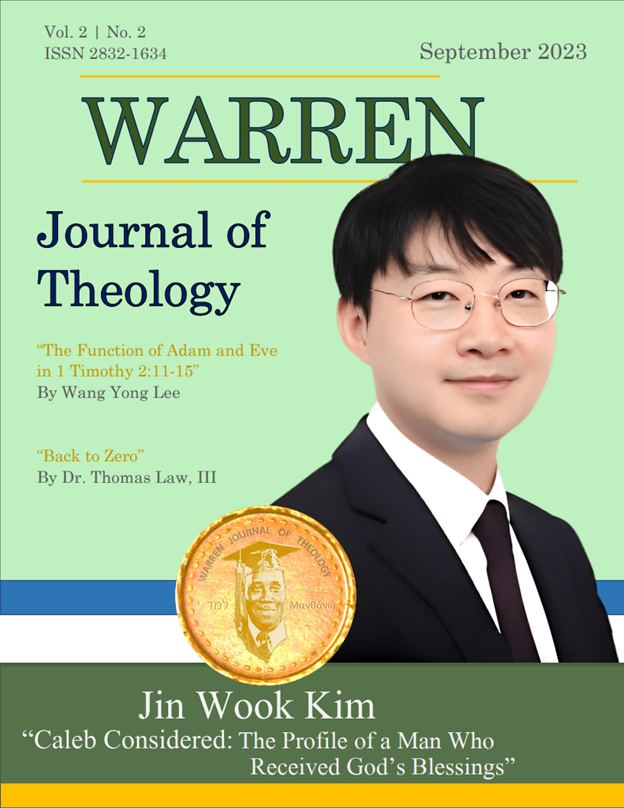
This paper argues that the Pentateuch contains a coherent, unified message: God prepared a place of blessing for humankind, humanity forfeited it through disobedience, God initiated a way back, and those who participate in God's blessings do so by faith. The paper tests this message against the narrative of Caleb in Numbers 13–14, demonstrating that Caleb's direct speeches and God's own description of him portray a man of wholehearted trust and obedience—contrasting sharply with the rebellious wilderness generation and with Moses himself, who did not enter the land. Caleb's story thus serves as a compelling case study in the Pentateuch's theology of faith-based participation in divine blessing.
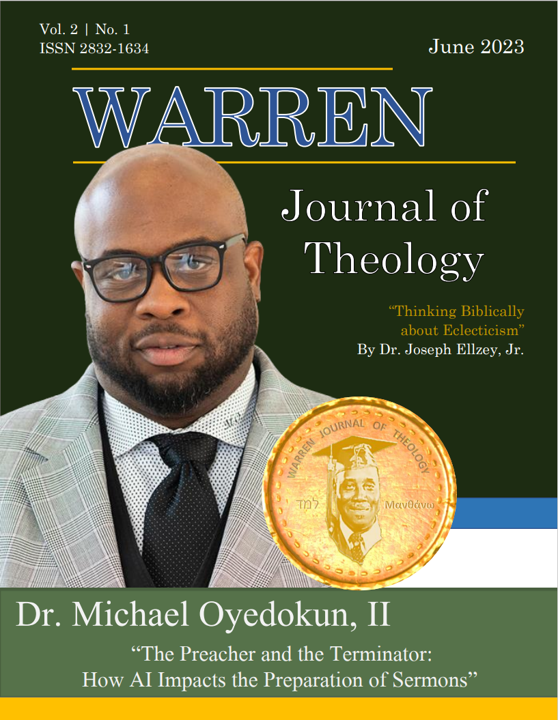
This article explores the impact of artificial intelligence—specifically Chat GPT—on the hermeneutical and homiletical process of sermon preparation. The author acknowledges both the potential value of AI as a research and language tool for preachers and its significant risks: fostering intellectual laziness, enabling plagiarism, and replacing the Spirit-directed authenticity that is essential to genuine proclamation. Drawing on 20 years of preaching experience and a doctorate in Advanced Expository Preaching, the author argues that while technology may supplement the preacher's craft, no AI can substitute for the divine voice that speaks through the preacher, and that the trumpet of the Gospel must retain its distinctive sound.
Using the Swiss watch industry's collapse as a metaphor for paradigm shift, this article argues that the Western church is at a 'hinge of history' requiring a return to New Testament foundations. The author identifies four key correctives: (1) moving from a 'Come and Hear' to a 'Go and Tell' posture, as modeled by Jesus and the early church; (2) replacing apologetics-driven programs with Spirit-led prayer and discernment; (3) starting evangelism where people actually are rather than where we wish them to be; and (4) shifting from an individualistic to a group-relational model of ministry. Together these shifts call the church toward an incarnational, go-to-them approach that reflects the relational DNA of the New Testament.
This paper investigates why Paul appeals to the narrative of Adam and Eve in 1 Timothy 2:13–14 as grounds for his instructions regarding women in the Ephesian church. Through linguistic analysis of the key Greek terms πρῶτος ('first') and πλάσσω ('to form'), examination of Genesis 2–3, and engagement with Second Temple Jewish literature, the author argues that Paul's use of Adam and Eve is grounded in both their historical reality and their archetypal significance for all humanity. Adam's temporal and functional priority in creation, and Eve's deception in the fall, are shown to provide the theological rationale for the created order Paul invokes in the context of congregational worship—an order with permanent implications for the life of the church.
This paper examines the eclectic method of textual criticism as applied to Old and New Testament manuscripts, arguing that reasoned eclecticism is superior to the majority text method for determining the best reading of Scripture. The author surveys the necessity, definition, and complexities of eclecticism, evaluates external and internal evidence, and demonstrates how the eclectic method—unlike the majority text method—accounts for textually insecure passages and enables scholars to reconstruct 97–99% of the original New Testament. The paper concludes that the consistent, literal, grammatical, historical hermeneutical principle must accompany textual criticism to guard against eisegesis and to ensure that doctrine is built only on textually secure passages.
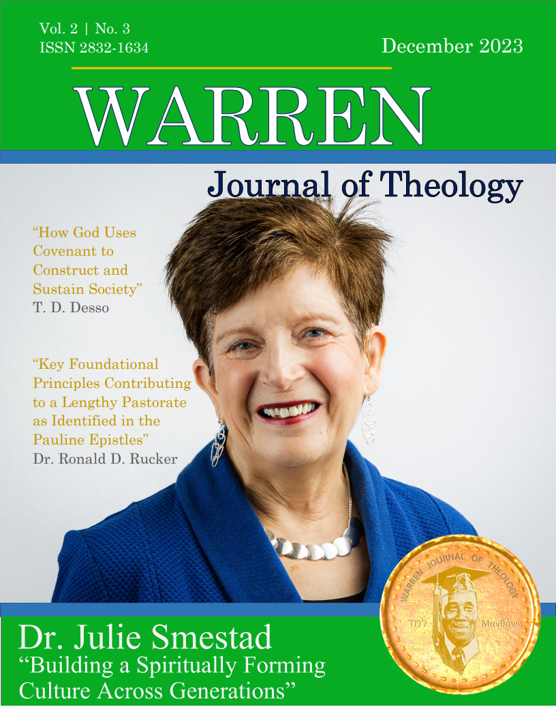
With American churches losing approximately one million young people annually and 64 percent of Millennials raised in the church having dropped out, this article presents qualitative case-study research on how traditional churches can make changes to spiritually form Millennials while retaining older generations. The author's doctoral research identified that successful churches build common community identity through three practices: (1) fostering cross-generational relationships, (2) valuing Millennials and their contributions, and (3) creating intergenerational learning experiences. Drawing on case studies of Eastbrook Church and Blackhawk Church, the article argues that a humble, relational, and mission-focused church culture—rather than organizational strategy alone—is the key to discipling all generations for Christ.
This paper explores five ways that divine covenant functions in the establishment and preservation of what the author terms 'divine covenantal society'—any society that is in covenant with God. The five functionalities examined are: covenant as mandate, agreement, promise, revelatory pedagogy, and point of reference for identity. These paradigms are traced through four covenants—Adamic, Noahic, Abrahamic, and Mosaic—drawing on the creation account and primeval history of Genesis 1–12 as interpreted through the lens of Deuteronomy 32 and Acts 17. The paper argues that divine covenantal society is fundamentally distinguished from secular society by its identity in God, its shared promise, and its eschatological orientation toward the inclusion of all nations.
With approximately 1,500 pastors leaving ministry monthly and the average pastoral tenure in Southern Baptist churches standing at just 4.6 years, this paper investigates the key foundational principles that contribute to a lengthy pastorate. Drawing on the example of the Apostle Paul in the Pauline Epistles, the author identifies five essential principles: spiritual maturity, understanding the call of God, prayer, leadership, and teaching the Word. The paper argues that the condition of a pastor's heart—not merely skill or strategy—is the decisive factor in long-term effectiveness, and that a tenured pastor who cultivates these principles will be equipped to stay the course and build a triumphant, fruitful ministry.
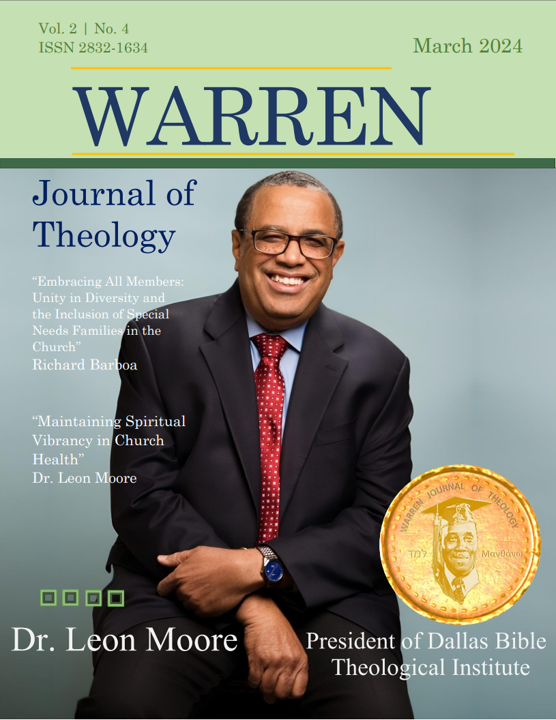
With Southern Baptist churches declining at 39% and plateauing at 42.5% according to 2022 LifeWay Research data, this article proposes the PEPLEAD model as a practical report card of seven spiritual markers for maintaining spiritual vibrancy in the local church. The seven markers are: Persistent Prayer, Proactive Evangelism, Biblical Preaching, godly servant Leadership, Intentional Equipping of believers, ongoing church Assessments, and intensive Discipleship. Grounded in Scripture and illustrated with a real-world church assessment case study, the author argues that church health is not incidental but requires continuous, intentional effort across all these dimensions in order to fulfill the Great Commission.
Drawing on Paul's body metaphor in 1 Corinthians 12:12-27 and personal experience as a parent of children with special needs, this article examines the gap between the church's biblical call to unity in diversity and the lived reality of families with disabilities. Research consistently shows that while churches are viewed as vital sources of spiritual support, they frequently fall short in welcoming and including special needs families, leaving them feeling ostracized rather than belonging. The author argues that genuine inclusion is not a mere accommodation but an essential component of a healthy Body of Christ, and proposes practical steps—including education, inclusive ministries, volunteer training, and fostering a culture of belonging—to help churches actively embody Paul's vision of mutual care and interdependence.
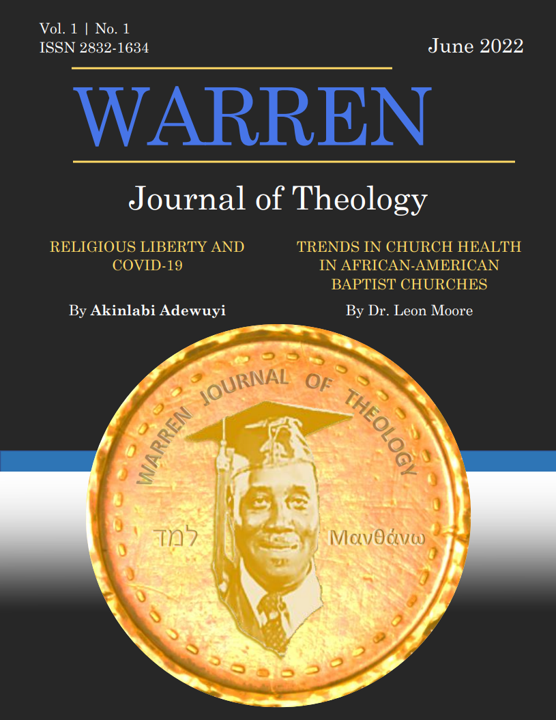
This paper examines the constitutional and biblical dimensions of Grace Community Church's (GCC) decision to defy California's COVID-19 restrictions on in-person worship. While affirming that GCC's constitutional position was vindicated by the Supreme Court—which struck down California's regulations as neither neutral nor generally applicable under the Free Exercise Clause—the paper argues that GCC's stance was nevertheless biblically deficient. Drawing on the Church's biblical mandate to love neighbors (Phil. 2:3-4), historical examples of churches cooperating with government during the 1918 Spanish flu pandemic, and the availability of alternative worship models adopted by other congregations, the paper concludes that GCC failed to balance its constitutional rights with its biblical responsibilities toward the community.
This study investigates why monarchy—more than any other form of government—commands the attention of creative literature, particularly within the British literary canon. Examining eight canonical works including the Arthurian legend, Paradise Lost, The Canterbury Tales, and The Faerie Queene, the paper identifies recurring themes of divine appointment, Christian community, perpetuity of government, and the sacrificial burdens of kingship. The author argues that these literary glorifications of divine monarchy may reflect a deep, subconscious human longing for the eternal Kingdom of God, and that the ideals embedded in British monarchial literature—bloodline legitimacy, peace-through-one, and community over individualism—carry significant implications for political theology and our understanding of eschatological governance.
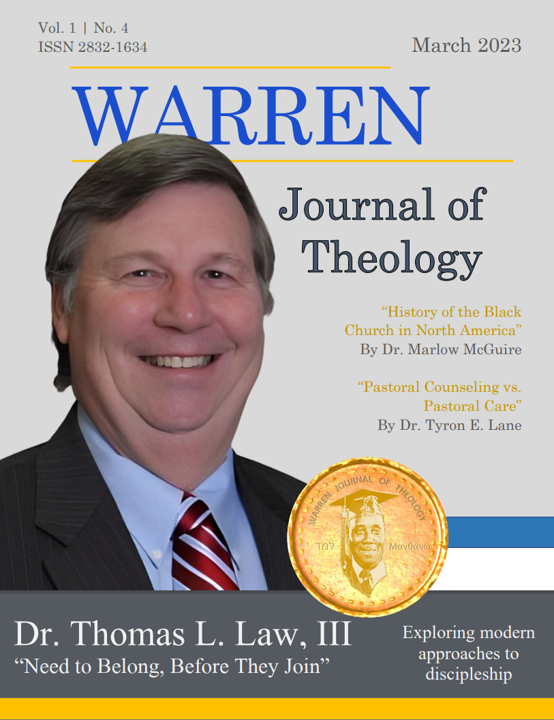
This article challenges the traditional evangelical model of conversion and church membership, arguing that contemporary seekers need to experience belonging before formal commitment. Drawing on historical patterns of group conversion, the shift toward Western individualism in spiritual formation, and the emerging paradigm of pre-conversion discipleship, the author proposes that discipleship begins at the first human encounter and extends throughout a lifetime. The article calls churches to move from programmatic approaches to intentional, life-on-life discipleship that precedes and extends beyond formal church membership.
This article examines the historically conflated roles of pastoral care and pastoral counseling within the Black church, arguing that they are distinct ministerial functions requiring different training and competencies. The author explores the Black pastor's expanding role as both spiritual shepherd and de facto counselor, defines pastoral care as the broad shepherding of a congregation and pastoral counseling as individualized therapeutic guidance rooted in both Scripture and psychology, and identifies six characteristics that distinguish Christian counseling from secular approaches. The article concludes that while all pastors are called to pastoral care, formal counseling training is increasingly essential for effective pastoral ministry in the 21st-century Black church.
This article traces the historical development of the Black church in North America, exploring how racial, social, and political dynamics shaped ecclesiastical separation. Beginning with the forced segregation of Black worshippers in established Anglo churches, the author examines key figures such as Richard Allen and Andrew Bryan, the formation of independent Black denominations, and the broader cultural and national forces that institutionalized racial division. The article concludes with a challenge to the modern church to reckon with this history as a necessary step toward genuine Christian unity.
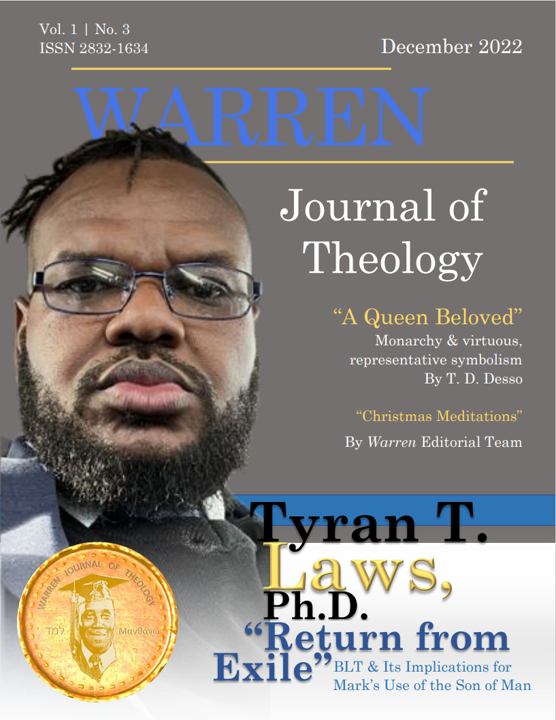
This paper offers Mark's appropriation of the Hebrew Bible's Return from Exile motif as a sequel to Black Liberation Theology (BLT). Building on BLT's use of the Exodus motif, the paper argues that the New Exodus/Return from Exile motif—as employed in the Gospel of Mark through the Son of Man—provides a framework for racial convergence between the Black and White Evangelical Church under the reign of Christ.
The decline of the British Empire also involved the decline of the British monarch's governmental powers. This work proposes that Queen Elizabeth II, though reigning during the erosion of practical powers, maintained abstract powers through moral authority and virtuous symbolic representation. The work argues that this allowance of one person to retain sovereignty in abstract powers evokes contemplations surrounding the virtuous symbolic representation of the Christ King.
This article surveys the state of church health in African-American Baptist churches, drawing on LifeWay Research data, Pew Research findings, and the author's own 2018 church health perception survey of 113 participants in African-American Southern Baptist churches. The data reveals that AABC are experiencing growth, plateau, and decline patterns similar to the broader SBC, with 41% declining and 24.6% plateauing according to LifeWay's five-year metrics. Contributing factors identified include youth departures, insufficient discipleship and evangelism, transfer growth vs. conversion growth, and the social pressures facing African-American families. The author calls for ongoing strategic church assessments and greater scholarly attention to this underresearched field as essential to sustaining healthy, kingdom-advancing congregations.
This paper argues that African culture—despite attempts by some scholars to deny its survival through the Trans-Atlantic slave trade—was the pre-eminent driving force behind the success of American revivalism in both the First Great Awakening (1730–1760) and the Second Great Awakening (1800–1830). Drawing on the work of Herskovits, DuBois, Sobel, and others, the author demonstrates that African cultural elements including ring dancing, shouting, folk preaching, and the call-and-response oratorical tradition survived slavery and were subsequently adopted by influential white preachers such as George Whitefield, Francis Asbury, and Devereux Jarrett. The paper traces this cultural transmission through figures like Harry Hoosier and Henry Evans, arguing that American Christianity—and indeed American popular culture—would not exist in its present form without the profound and underacknowledged contribution of African and African-American culture.
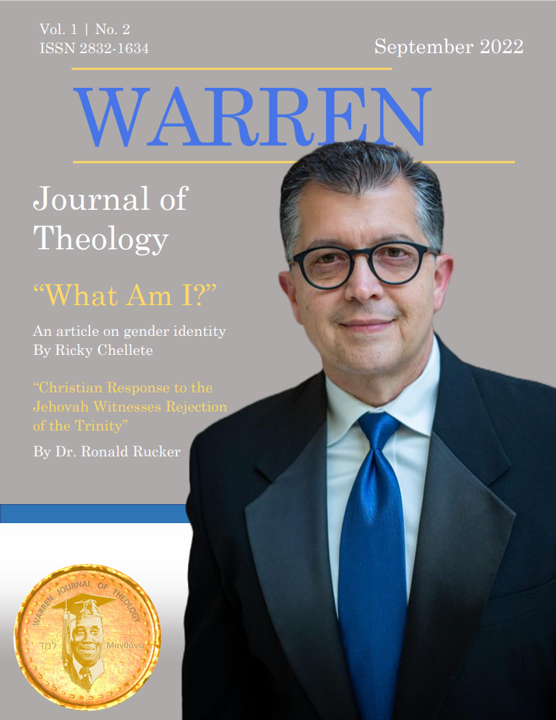
This essay provides an introductory survey of the Jehovah's Witnesses' rejection of the doctrine of the Trinity, arguing that their theological positions are a modern continuation of fourth-century Arianism. The paper traces the origins of the Arian controversy from Arius of Alexandria in 319 A.D. through the Council of Nicaea (325 A.D.), then examines two primary Jehovah's Witnesses objections to the Trinity: that the term does not appear in Scripture, and that the doctrine is inherently confusing and therefore not of God. Drawing on biblical texts and comparative analysis, the author refutes both objections and demonstrates that the Watchtower Bible and Tract Society's Christology closely mirrors the Arian heresy condemned at Nicaea. The essay concludes with a call for Jehovah's Witnesses to abandon the Watchtower's doctrinal framework in favor of Scripture alone.