Four volumes of peer-reviewed theological scholarship.
Join the next generation of theological scholars.
Meet the minds behind the Warren Foundation.
Publish your research in our peer-reviewed journal.
Help keep rigorous theology free and accessible.
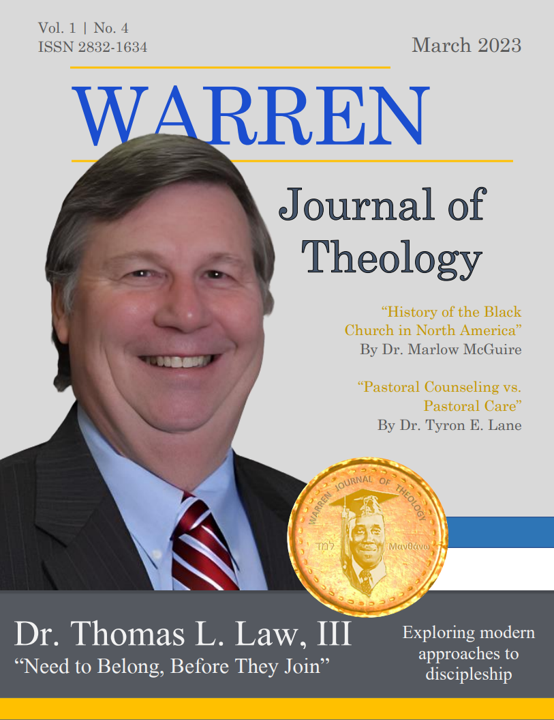
Volume 1 · Issue 4
March 2023
3 articles
Read the full issue as a flipbook
Create a free account or sign in to read the complete issue.
This article examines the historically conflated roles of pastoral care and pastoral counseling within the Black church, arguing that they are distinct ministerial functions requiring different training and competencies. The author explores the Black pastor's expanding role as both spiritual shepherd and de facto counselor, defines pastoral care as the broad shepherding of a congregation and pastoral counseling as individualized therapeutic guidance rooted in both Scripture and psychology, and identifies six characteristics that distinguish Christian counseling from secular approaches. The article concludes that while all pastors are called to pastoral care, formal counseling training is increasingly essential for effective pastoral ministry in the 21st-century Black church.
This article challenges the traditional evangelical model of conversion and church membership, arguing that contemporary seekers need to experience belonging before formal commitment. Drawing on historical patterns of group conversion, the shift toward Western individualism in spiritual formation, and the emerging paradigm of pre-conversion discipleship, the author proposes that discipleship begins at the first human encounter and extends throughout a lifetime. The article calls churches to move from programmatic approaches to intentional, life-on-life discipleship that precedes and extends beyond formal church membership.
This article traces the historical development of the Black church in North America, exploring how racial, social, and political dynamics shaped ecclesiastical separation. Beginning with the forced segregation of Black worshippers in established Anglo churches, the author examines key figures such as Richard Allen and Andrew Bryan, the formation of independent Black denominations, and the broader cultural and national forces that institutionalized racial division. The article concludes with a challenge to the modern church to reckon with this history as a necessary step toward genuine Christian unity.