Four volumes of peer-reviewed theological scholarship.
Join the next generation of theological scholars.
Meet the minds behind the Warren Foundation.
Publish your research in our peer-reviewed journal.
Help keep rigorous theology free and accessible.
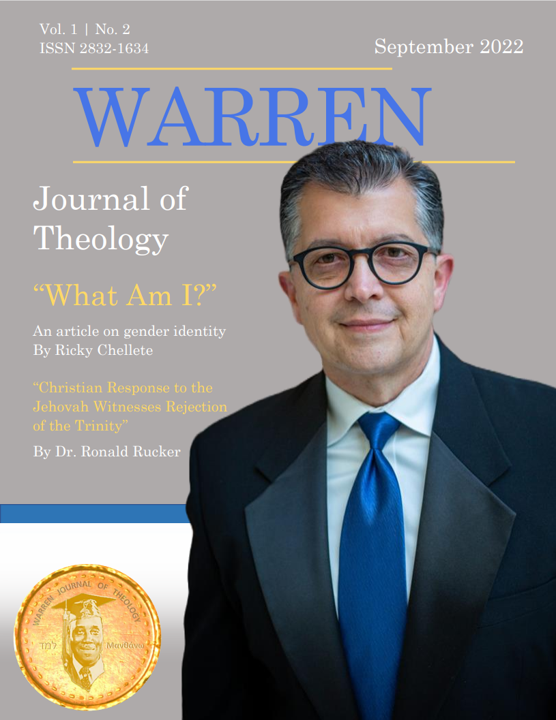
Volume 1 · Issue 2
Sept. 2022
1 article
Read the full issue as a flipbook
Create a free account or sign in to read the complete issue.
This essay provides an introductory survey of the Jehovah's Witnesses' rejection of the doctrine of the Trinity, arguing that their theological positions are a modern continuation of fourth-century Arianism. The paper traces the origins of the Arian controversy from Arius of Alexandria in 319 A.D. through the Council of Nicaea (325 A.D.), then examines two primary Jehovah's Witnesses objections to the Trinity: that the term does not appear in Scripture, and that the doctrine is inherently confusing and therefore not of God. Drawing on biblical texts and comparative analysis, the author refutes both objections and demonstrates that the Watchtower Bible and Tract Society's Christology closely mirrors the Arian heresy condemned at Nicaea. The essay concludes with a call for Jehovah's Witnesses to abandon the Watchtower's doctrinal framework in favor of Scripture alone.